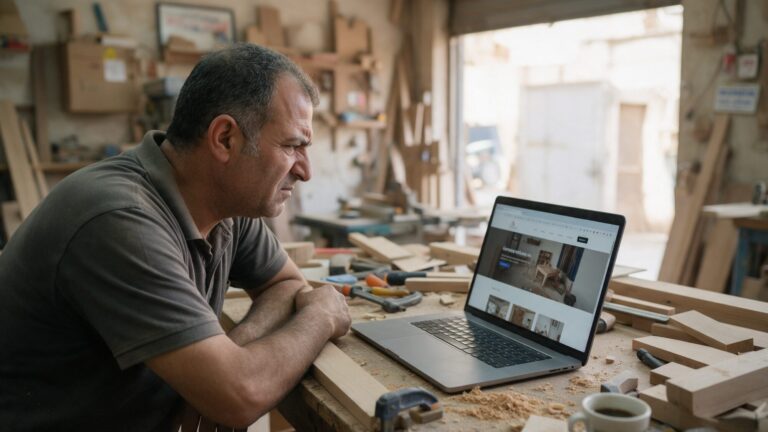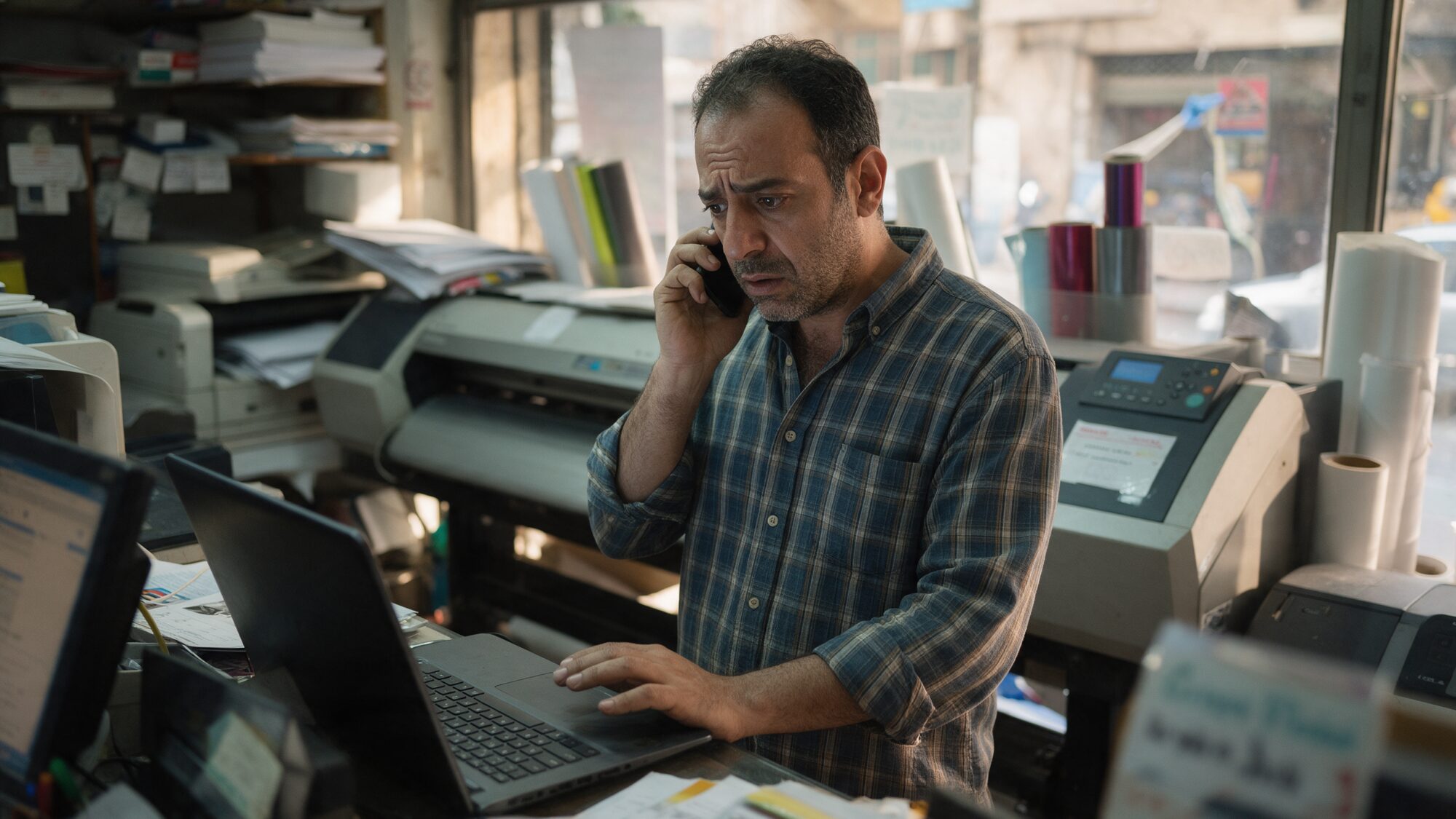
In late 2018, a Lebanese court order blocked Wix, then the most-used website builder in the country, and business websites built on it stopped loading for customers in Lebanon with no warning. The lesson has nothing to do with politics: if one platform holds your domain, your hosting or your content, someone else decides whether your business is visible online.
This is not a story about who was right. It is a story about what happens to a small business when the ground moves under it overnight, and what you can set up today so it never happens to you.
What actually happened
In November 2018, according to the Lebanese digital rights organisation SMEX, an order was issued to block all access to Wix in Lebanon. At the time, Wix ranked #1 out of 31 website builder technologies in the country, based on Datanyze market share data that SMEX cited.
L’Orient Today reported in December 2018 that the order came from a Lebanese court, citing the state of war between Lebanon and Israel. Wix is headquartered in Tel Aviv. Ogero began applying the block, and it was gradually extended to other internet providers. Freedom House later noted that the order relied on Lebanon’s 1963 boycott law.
The key detail for any business owner: users were given no advance notice. One day the site worked. The next, customers in Lebanon got an error page.
Who was affected
- Small businesses and freelancers who had built their site on Wix because it was quick and cheap.
- Their customers in Lebanon, who could no longer open those sites without a VPN.
- The owners themselves, some of whom could not even log in to edit their own site or reach their own data from home.
A Lebanese designer quoted by L’Orient Today put it simply: he could no longer access his site or his data from his residence in Lebanon. Nobody could say exactly how many local businesses were hit, which is part of the problem. When a block is silent, the damage is too.
How long did it last?
There was no clean ending. Freedom House’s Lebanon reports describe Wix as inaccessible on mobile networks and some internet providers since December 2018, while reachable on others. Its report covering mid-2023 to mid-2024 still described it that way.
In plain terms: years later, whether a customer could open a Wix site depended on which network they happened to be on. For a business, “sometimes reachable” is close to “not reachable”. Most Lebanese browse on their phones, and the mobile networks were exactly where the block held.
Why this matters for your business
Here is the uncomfortable part. Owners who were hit did nothing wrong. They paid for a service, built a site, shared the link on Instagram and business cards. Then a decision far above their heads made it disappear for local customers.
Cybersecurity expert Hadi El-Khoury told L’Orient Today it looked like a disaster recovery scenario, just triggered by a government decision instead of a cyberattack. He estimated a simple showcase site could be relaunched in about two weeks, while an online shop could take a month or more, at real cost.
Two weeks to a month with no website. Think about what that means for a clinic in Jounieh taking bookings, a restaurant in Mar Mikhael with its menu online, or a supplier in Tripoli whose clients check prices before calling. Those enquiries do not wait. They go to whoever shows up next.
Owners who had their own domain and a copy of their content were in a far better position. They could point the same address at a new host and keep going. Owners whose whole presence lived inside one builder had to start from scratch, often under a new address their customers did not know.

The 2025 version: Meta account bans
If you think “that was a one-off Lebanese thing”, look at 2025. From around mid-2025, Instagram and Facebook users worldwide reported waves of sudden account bans. TechCrunch and TechCentral reported in June 2025 that many owners said they had broken no rules, that appeals went unanswered, and that there was no human to talk to.
Western Australia’s Small Business Development Corporation warned in August 2025 that beauty, fitness and photography businesses were among those hit, citing a media report of around 10 million accounts disabled since the start of that year. Australian reporting described a Brisbane hairdresser locked out of her business and personal accounts for about six months.
Different cause, same result. A business that lives on one platform can lose its shop window, its customer messages and years of followers overnight, with no one to call. That is a global risk, not a Lebanese one, and it hits Lebanon hard because so many businesses here sell almost entirely through Instagram, Facebook and WhatsApp. We covered that trade-off in Instagram vs. website.
| What happened | Wix block (2018) | Meta bans (2025) |
|---|---|---|
| Trigger | Court order applied by internet providers | Automated moderation, disputed by many owners |
| Warning | None | Usually none |
| Who could fix it | Not the business | Not the business |
| Who recovered fastest | Owners with their own domain and backups | Owners with a website and a customer list |
Not sure where your own business stands? Send us your website link (or your Instagram, if that is all you have) on WhatsApp for a free 2-minute check. A real person replies with 3 honest observations, including how exposed you are if one platform goes dark.
Your business continuity checklist
You cannot control court orders or algorithms. You can control what you own. Here is the checklist we would want every owner in Beirut, Zahle or Saida to tick.
- Own your domain, in your own name. Register yourbusiness.com or yourbusiness.com.lb under your name or your company’s, with your email on the account. Not your nephew’s, not your old designer’s. The domain is your address; if it is yours, you can move everything behind it.
- Own your content. Keep your texts, photos, price lists, menus and logo in a folder you control, such as Google Drive or a USB drive. If you had to rebuild tomorrow, you should not need to ask anyone for your own material.
- Keep real backups. Automatic backups of your full website, stored somewhere other than the server it runs on. Then check once or twice a year that a backup actually restores.
- Use a host you can leave. Choose a setup where your site can be exported and moved to another provider. A standard WordPress site can be. A site locked inside a proprietary builder usually has to be rebuilt.
- Do not rely on one platform for customers. Your website, your Google Business Profile, Instagram, WhatsApp Business and an email or phone list should all point to each other. If one disappears, customers still find you through the others.
- Keep the keys in one safe place. Domain login, hosting login, website admin, Google accounts and social media logins, written down and stored securely. Turn on two-factor authentication everywhere.
- Collect contacts you own. A WhatsApp broadcast list or an email list of past customers is the one audience no platform can take away.
Common mistakes we still see
- The domain is registered to the developer. The relationship ends, the renewal email goes to someone else, and the address expires or gets held hostage.
- “The builder handles backups.” Maybe. But a backup stored on the same platform does not help if that platform is unreachable.
- The only copy of the photos is on Instagram. If the account is banned, so is your portfolio.
- Choosing the cheapest builder without checking the exit. Ask before you pay: can I export this site and move it? If the answer is vague, assume no. Our guide to what a website costs in Lebanon in 2026 covers what you should get for the money.
- Waiting for a crisis to act. Everything on the checklist takes hours when things are calm, and weeks when they are not.
One more point. A site that customers can reach also has to work once they get there. If yours is slow or out of date, these 7 signs will show you where enquiries are slipping away. A website you own is also what AI assistants and Google read when they decide which local businesses to mention, as we explained in how to get recommended by ChatGPT, Gemini and Google AI.
What “owning it” looks like in practice
As one honest example: at One Call Studio, the team behind Webboxed, every site is built on standard, responsive WordPress. After payment, you receive the website and the right to export it, so you are never locked in (third-party licences apply). Every package includes a year of free hosting. Packages start at $490 one-time, and builds typically take 3–10 business days once your materials are ready.
Whoever you work with, the question to ask is the same: if this provider, this platform or this network disappeared tomorrow, could I be back online under the same address within days? If the answer is no, fix that first.
Quick answers
Frequently asked questions
Why was Wix blocked in Lebanon?
According to L'Orient Today and Freedom House, a Lebanese court order in late 2018 blocked Wix, citing the state of war with Israel and Lebanon's 1963 boycott law, since Wix is headquartered in Tel Aviv. Users received no advance notice.
Is Wix still blocked in Lebanon?
Freedom House reported for years after 2018 that Wix remained inaccessible on mobile networks and some internet providers in Lebanon while working on others. Access has depended on the network a visitor uses, so a site on it cannot count on reaching every local customer.
If I own my domain, am I safe from platform blocks?
Owning your domain is the most important step, because it lets you point the same address to a new host. You also need your own copy of your content and backups so there is something to move.
Is a website really safer than Instagram for my business?
Neither is risk-free, but a website on your own domain, with backups and a host you can leave, is something you control. Instagram accounts can be suspended by automated systems with little or no human support, as the 2025 ban waves showed.
How long does it take to move a website to a new host?
A standard WordPress site with a recent backup can usually be moved in days. A site locked inside a proprietary builder often has to be rebuilt, which one expert estimated at about two weeks for a simple site and a month or more for an online shop.
Own your corner of the internet
Your domain, your content, a site you can move whenever you want. Tell us about your business and a real person will come back to you with a clear price and a clear timeline. Start your website →