A clinic website gets more bookings when it answers a patient’s practical questions before they have to call: who the doctor is, what the service involves, when you’re open, where to park, what it costs to book and how to book in one tap. Put doctor profiles, clear service pages, WhatsApp or online booking, location and hours, insurance and payment info, and real reviews on a fast, bilingual mobile site, and patients stop leaving for the clinic that made it easier.
Why this matters more for clinics than almost anyone else
Choosing a dentist is not like choosing a sandwich. Patients are nervous and want to trust a real person before they book.
That trust check now happens online. A patient hears your name from a cousin in Jounieh, sees a post on Instagram, then Googles you. If what they find is a dead Facebook page and a phone number nobody answers at 9pm, they quietly book someone else. You never hear about it.
In a US survey of 1,201 adults, DreamHost’s 2026 Local Business Trust Index found that 58% often or always check a business website to confirm what they saw on social media, Google or AI tools. It’s a US number, but anyone who has watched a Lebanese mother research a paediatrician knows the habit travels.
The other cost is time. Every patient who has to call to ask “Do you take my insurance?” is five minutes of your receptionist’s day. Multiply that by 30 calls and you’ve lost a morning to questions a web page could answer.
The 10 things a clinic website must have
1. Doctor and team profiles with real credentials
Patients book people, not logos. Each doctor needs a proper profile: a recent, natural photo, specialty, where they trained, years in practice, languages spoken, and memberships such as the Order of Physicians or the Order of Dentists.
Add the team too. A friendly photo of the nurse or receptionist who answers WhatsApp does more for a nervous patient than any slogan.
2. Services explained in plain language
One short page or section per service: what it is, who it’s usually for, what happens during the visit, how long it takes, and what to bring. Write it for the patient, not for a medical journal.
Keep it factual. Explain the process; don’t promise outcomes. “Results guaranteed” has no place on a clinic site, and in Lebanon the professional Orders have long restricted how doctors may promote themselves, so check your Order’s rules before publishing anything that sounds like an advert.
3. Booking in one tap: online or WhatsApp
This is the big one. On every page, on mobile, there should be a visible button that says “Book on WhatsApp” or “Book an appointment”.
WhatsApp booking is the natural choice for most Lebanese clinics, because that’s where patients already are. A pre-filled message (“Hello, I’d like to book with Dr. … for …”) saves everyone a back-and-forth. Larger practices with several doctors often move to an online booking calendar that shows real available slots and sends reminders.
4. Location, map, parking and hours
“Next to the pharmacy, second floor, the building with the blue balcony” is how Lebanon gives directions. Put that on the site, along with an embedded Google map, the floor, whether there’s a lift, and where to park. In Achrafieh or Hamra, parking alone can decide whether someone keeps the appointment.
List opening hours per day, including Saturdays, and update them for holidays. Wrong hours are one of the fastest ways to lose trust.
5. Insurance and payment info
Say clearly which insurers and mutual funds you work with, whether you handle NSSF paperwork, and how patients can pay: USD cash, LBP, card, or transfer. If consultation fees are fixed, consider showing them. If they vary, say “from”. Silence on money makes patients assume the worst.
6. The 5 questions every patient calls to ask
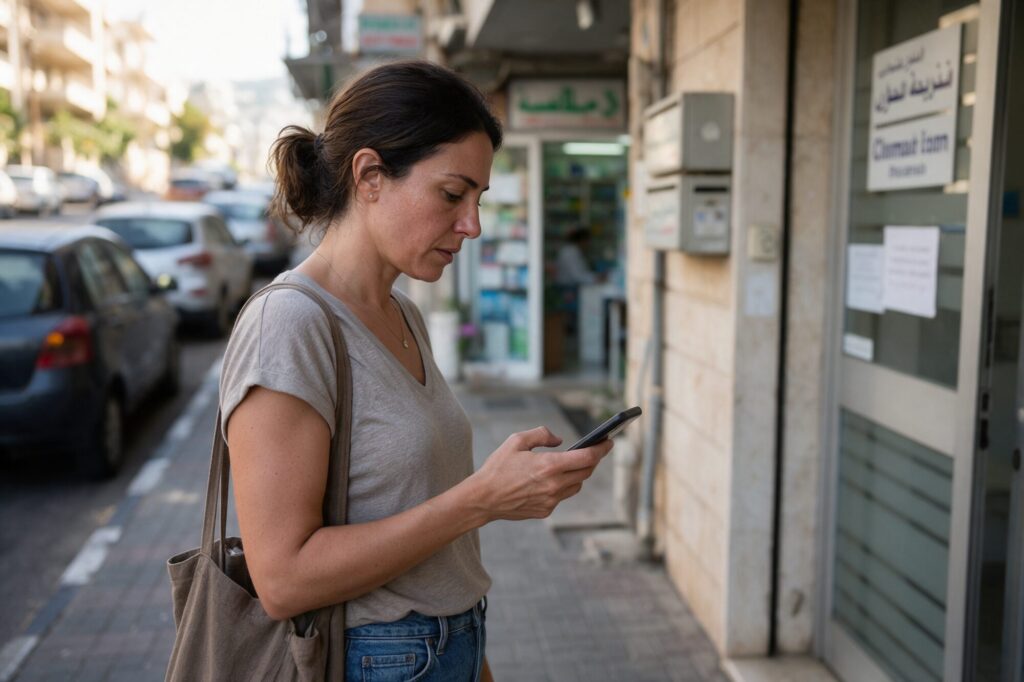
Ask your receptionist. They’ll tell you the same five questions come up every single day:
- Do you accept my insurance?
- How much is a consultation?
- Where exactly are you, and is there parking?
- Are you open on Saturday (or after 5pm)?
- How soon can I get an appointment, and how do I book?
Answer all five on the page, in a short block near the booking button. Every one you answer is a call your team doesn’t have to take, and a patient who books instead of hesitating.
7. Reviews from real patients
Show genuine reviews, ideally pulled from or linked to your Google Business Profile so they can be verified. A handful of honest, recent reviews beats twenty polished ones that sound written by a cousin.
Always ask patients’ permission before quoting them, never share health details, and skip before-and-after photos unless you have written consent and your Order allows it.
8. Arabic and English (and French, if your patients need it)
Lebanese patients switch languages mid-sentence, and so should your site. At minimum, Arabic and English. In some areas and specialties, French matters too. Arabic must be properly right-to-left, not a Google Translate paste where the punctuation ends up on the wrong side.
9. Privacy and trust signals
A clinic handles sensitive information, so the site should look like it takes that seriously:
- A secure connection (the padlock, HTTPS) on every page.
- A short privacy notice explaining what you collect through forms or booking and why. Lebanon’s Law 81/2018 covers personal data, and health data deserves extra care.
- Booking forms that ask only what you need: name, phone, preferred time. No medical history over a web form.
- Your clinic’s registered name, address and landline visible in the footer.
10. Fast on a phone, even on weak data
Most patients will find you on a phone, often on mobile data, sometimes during a power cut on the building generator’s Wi-Fi. If the page takes ten seconds to load because of a giant hero video, they’re gone.
Compress images, skip autoplay video, and test the site on an ordinary Android phone, not just the doctor’s new iPhone on office fibre.
Not sure how your current site scores on these ten? Send us your link on WhatsApp for a free 2-minute website check. We’ll reply with 3 honest observations, no sales pitch attached.
A quick checklist by clinic type
| Clinic type | What patients look for first | Easy win on the website |
|---|---|---|
| Dental clinic | Price ranges, whether you see children, emergency slots | A “first visit” page explaining what happens and what it costs to start |
| Physiotherapy | Number of sessions, insurance, home visits | A clear page on how a typical course of sessions is booked and paid |
| Dermatology / aesthetics | Doctor’s credentials, consultation fee, privacy | Strong doctor profile and a discreet WhatsApp booking button |
| Family / private practice | Hours, walk-ins, languages spoken | Hours per day, holiday notices, and the 5 questions block |
Common mistakes we see on clinic websites
- The website is just an Instagram link. Instagram is great for showing your space and team. It’s a poor place to explain insurance, hours and parking, and it can vanish overnight if the account is restricted. (More on this in Instagram vs. website.)
- Booking is buried. If a patient has to scroll, open a menu and find a form, many won’t.
- Stock photos of smiling models. Patients want to see your actual clinic and your actual doctor.
- Medical claims and promises. “Painless”, “permanent results”, “best in Lebanon”. Risky with your Order, and patients don’t believe them anyway.
- Old information. A doctor who left two years ago, wrong hours, a disconnected number. Each one says “nobody’s home”.
- No Google Business Profile. When someone searches “dentist near me” in Zalka, the map results matter as much as your site. Both should match.
If several of these sound familiar, 7 signs your website is quietly losing you customers goes deeper.
What this costs, and how long it takes
A solid clinic site doesn’t need to be a six-month project. Most of the work is collecting the right information: doctor bios, service descriptions, insurance list, photos. Once that’s ready, building it is the quick part. (For why some sites drag on for weeks, see why some websites take 8 weeks and others take 5 days.)
As one honest example: at One Call Studio, a small single-doctor clinic often fits the Business package ($990, up to 10 pages). A multi-doctor practice that wants deeper service pages and an online booking calendar usually fits Growth ($1,590), which includes one standard integration such as booking. If you’re on a smaller package, a booking integration add-on starts from $200, and an extra language from $300. Builds take 3–10 business days once materials are ready, with a real person on the kickoff call and human QA before launch. Full details are on our pricing page, and you can compare with the wider market in how much a website costs in Lebanon in 2026.
The bottom line
Patients don’t need a beautiful website. They need an honest one that tells them who you are, what you do, where you are, what it costs to start and how to book, in their language, on their phone. Get those right and you stop losing the patients who never called.
Quick answers
Frequently asked questions
Should a clinic in Lebanon use WhatsApp booking or an online booking calendar?
Most single-doctor clinics start well with a WhatsApp booking button and a pre-filled message, because that's where patients already are. Multi-doctor practices often benefit from an online calendar that shows real available slots and sends reminders.
Should a clinic website show consultation prices?
You don't need a full price list, but saying the consultation fee or a 'from' price, plus accepted insurers and payment methods (USD, LBP, card), removes the most common reason patients call and then hesitate.
Can I post patient reviews and before-and-after photos on my clinic website?
Genuine reviews help, ideally linked to your Google Business Profile, and only with the patient's permission and without health details. Before-and-after photos need written consent and should be checked against your professional Order's rules first.
Does a clinic website need to be in Arabic and English?
For most Lebanese clinics, yes. Patients search and read in both, and some specialties and areas also need French. Arabic should be proper right-to-left, not a machine-translated copy.
How long does it take to build a clinic website?
With One Call Studio, builds take 3–10 business days once materials such as doctor bios, service descriptions, insurance lists and photos are ready. Gathering that content is usually the slowest part.
Make booking with your clinic the easy choice
Tell us about your clinic in a free 30-minute call. We’ll plan the pages, the booking flow and the languages with you, then build it in 3–10 business days once your materials are ready. Start your website →