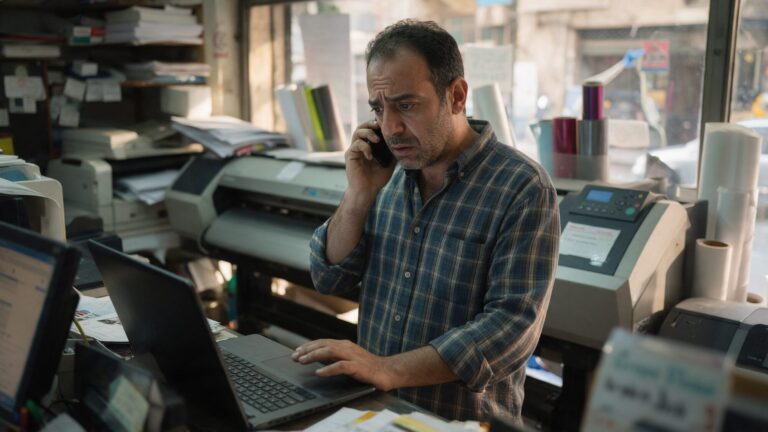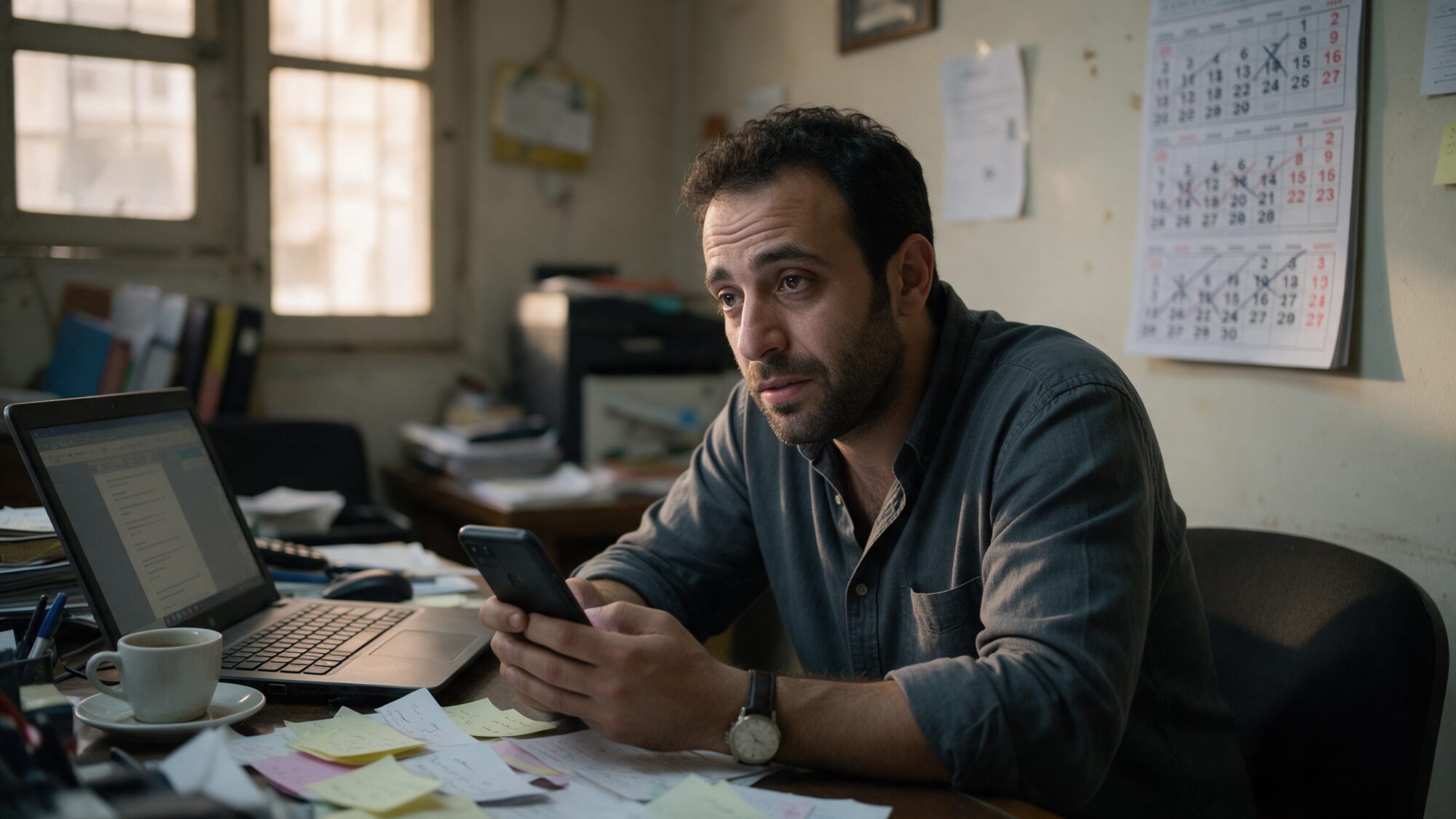
Most websites that take 8 weeks don’t need 8 weeks of work. They need maybe 5 to 10 days of real building, and the rest is waiting: for content, for meetings, for feedback, for one more person to approve the homepage.
Why the timeline matters more than you think
Every week your website isn’t live is a week a customer Googles you and finds nothing, or finds an old page with a dead phone number. They don’t call to complain. They just book with the clinic down the road.
A long project also costs you something that never shows up on the invoice: your time. Every extra meeting, every “quick question” on WhatsApp, every round of “can we try it in blue?” is an hour you are not serving customers.
And long projects have a habit of dying. Plenty of owners in Beirut and Jounieh have a half-finished website sitting on someone’s server since 2023. Momentum is everything. Lose it, and the project quietly becomes “we’ll finish it after Eid” forever.
If you are still deciding whether you even need a site, start with Instagram vs. website. If you have decided, keep reading.
Where the 8 weeks actually go
When a small-business website drags on for two months, the developer is rarely typing code for two months. Here is where the time really disappears.
1. Waiting for content
This is the big one. The agency is ready, the design is ready, and everyone is waiting for the “About us” text, the logo in good quality, the photos of the team, and the price list. Web designers widely describe waiting on client content as the longest part of many projects. It’s nobody’s fault exactly. You are running a business; writing your own website copy is the task that always gets pushed to tomorrow.
2. Meetings about meetings
A discovery workshop. A follow-up. A “brand alignment” session. A call to review the sitemap. Each one needs everyone’s calendar to line up, which in practice means a week between each.
3. Fully custom design from a blank page
Designing every page from scratch makes sense for a big brand with specific needs. For a 6-page site for a dental clinic in Achrafieh, it often means three weeks of mockups for a layout that ends up looking like a well-made template anyway.
4. Feedback in drips
You send a comment on Monday. Your partner sends a different one on Wednesday. Your cousin who “knows computers” weighs in on Friday. Each drip restarts the cycle, and five small rounds take far longer than one big one.
5. Approvals and the missing decision-maker
Design by committee is one of the most common reasons web projects stall. If three partners all need to say yes, and one is travelling, the whole thing waits.
6. Scope that keeps growing
“While we’re at it, can we add an online shop? And a blog? And Arabic?” Each is reasonable. Together, they turn a 2-week project into a 3-month one, with a new quote attached.
What a focused process looks like instead
Speed doesn’t come from cutting corners. It comes from removing the waiting.
A focused process looks something like this:
- One kickoff call. One proper conversation where we agree what the site is for, who it’s for, and what pages it needs. Not five.
- Clear scope, written down. A fixed number of pages and a clear price. If you want more later, that’s a separate decision, not a surprise.
- Proven templates adapted by experts. Not a blank page, and not a cheap theme slapped together. A tested structure, customised by someone who has built hundreds of these, to fit your brand and your customers.
- AI for the repetitive parts, humans for the judgement. AI tools speed up first drafts, image resizing and checks. A real person reviews every page, every line of copy and every link before you see it.
- Consolidated revisions. You collect all your comments, from everyone who needs a say, into one list. We apply them in one round. Clean and fast.
Side by side: the same small-business site, two ways
Here is a realistic comparison for a typical 5 to 8 page site for a clinic, restaurant or service business. The traditional column is not a worst case. It is what “normal” looks like for a lot of projects.
| Stage | Traditional project | Focused process |
|---|---|---|
| Discovery and planning | 2–3 meetings over 1–2 weeks | One kickoff call |
| Content collection | 2–4 weeks of reminders | Ready before the clock starts |
| Design | Custom mockups, 2–3 weeks | Expert-adapted template, 1–2 days |
| Build | 1–2 weeks | 1–3 days |
| Feedback and revisions | Many small rounds, 1–2 weeks | One or two consolidated rounds |
| Approvals | Waiting on every stakeholder | One named decision-maker |
| Testing and launch | A few days | Human QA, then live |
| Total | Often 6–10 weeks or more | 3–10 business days once materials are ready |
For context, many package-based web shops quote somewhere between 30 and 110 days for this kind of project. Most of that gap is not skill. It’s process.
The honest part: fast only works if you’re ready
Let’s be straight. A 5-day website is not magic, and anyone who promises one without asking for your content first is setting you up for disappointment.
A fast timeline works when:
- Your text is written, or you’ve paid someone to write it.
- Your logo and photos are in decent quality (not screenshots from Instagram, yalla, we’ve all done it).
- You have access to your domain, or know who registered it.
- One person can make final decisions.
Missing any of these? The clock simply doesn’t start yet. That’s not a trick. It’s the only honest way to give a timeline.
Not sure if you’re ready? Send us your current link or Instagram page on WhatsApp for a free 2-minute website check, and we’ll reply with 3 honest observations. Or grab the free Website Readiness Checklist and tick through it before you talk to anyone.
When a longer project is genuinely the right call
Some websites should take 8 weeks, or longer. That includes:
- Online shops with hundreds of products, stock syncing and payment gateways.
- Full Arabic and English sites with right-to-left layouts built properly, not just translated.
- Custom booking systems, member portals or integrations with your internal software.
- Brand-new businesses that don’t yet have a name, logo or clear offer.
- Large organisations where legal, marketing and management all need to sign off.
If that’s you, a longer timeline is not a red flag. A vague timeline is. Ask for one with clear stages and a clear price for each.

Common mistakes that turn 5 days into 5 weeks
- Starting before the content exists. “We’ll write it as we go” is the single fastest way to stall a project.
- Too many cooks. Pick one decision-maker. Everyone else sends their notes to that person, not to the developer.
- Feedback by voice note, one at a time. Twelve separate WhatsApp voice notes over four days is not a revision round. One written list is.
- Adding features mid-build. Launch the core site first. Add the shop or the blog in phase two.
- Comparing timelines without comparing scope. A 4-page site and a 15-page site with booking are not the same job. If you’re comparing quotes, our guide on how much a website costs in Lebanon in 2026 breaks down what you should get at each level.
- Forgetting the domain. Many owners discover on launch day that a former employee registered the domain years ago. Check now.
One example of how this works in practice
At One Call Studio, from the team behind Webboxed, we built the process around removing the waiting. Our packages have fixed prices and target timelines: Launch at $490 targets 3 business days, Business at $990 targets 5–7 business days, and Growth at $1,590 targets 7–10 business days.
The timeline starts after payment, approved content and access, and we say that up front. Every build includes a kickoff call, human QA and 30 days of defect fixes. You can see the full steps on our how it works page.
We’re not the only way to do this. But whoever you work with, ask them one question: “When exactly does your clock start, and what do you need from me before it does?” Their answer will tell you a lot.
A website that goes live in days and starts catching enquiries beats a perfect one that’s still “almost ready” in spring. And if you’ve seen what happens when a platform disappears overnight, as in what happened when Lebanon blocked Wix, you know that owning your own corner of the internet is worth doing sooner rather than later.
Quick answers
Frequently asked questions
How long does it take to build a small business website?
The actual build for a 4 to 15 page small-business site can take 3–10 business days once materials are ready. Projects often stretch to 6–10 weeks because of waiting on content, meetings and feedback rounds, not because of the work itself.
What do I need ready before a fast website build can start?
Your written text, a good-quality logo and photos, access to your domain, and one person who can make final decisions. Without these, no honest provider can start the clock.
Does a faster website mean lower quality?
Not necessarily. Speed comes from a clear scope, proven templates adapted by experienced people, and consolidated revisions, with a human reviewing everything before launch. Quality drops when steps like testing are skipped, so ask what QA is included.
When should a website take longer than two weeks?
Large online shops, full bilingual Arabic/English sites with proper right-to-left layouts, custom integrations, and projects with many stakeholders genuinely need more time. In those cases, ask for a staged timeline with a clear price for each stage.
How can I avoid delaying my own website project?
Prepare content before kickoff, name one decision-maker, and send all feedback as one written list rather than scattered messages. Save extra features for a second phase.
Ready to stop waiting on your website?
Get your materials together, book one kickoff call, and own your corner of the internet in days, not months. Clear price, real people, no endless meetings. Start your website →